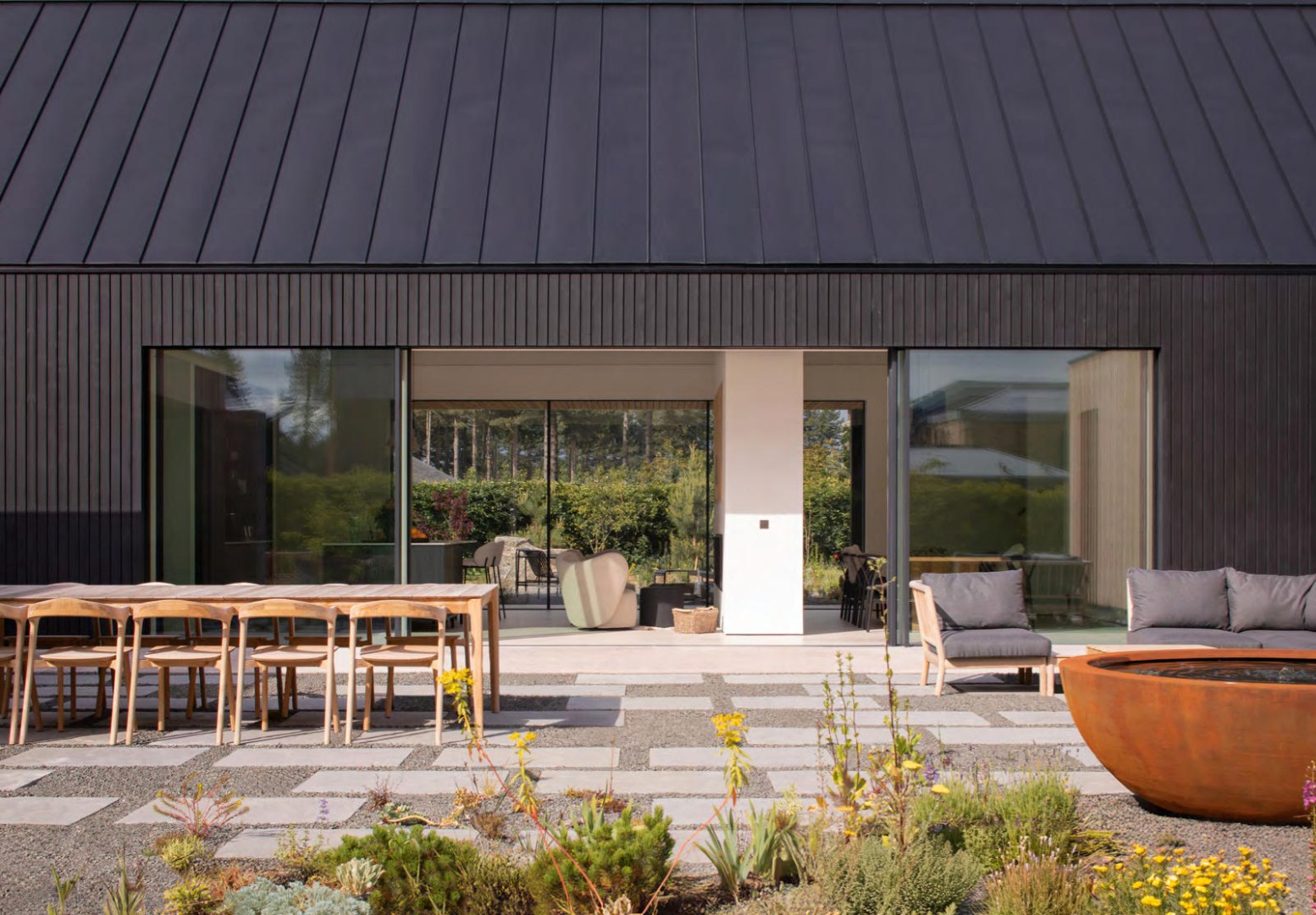
Some houses are designed to be seen, whereas The Cairn House is designed to be felt. Its calm is not immediate or performative, it tends to settle slowly, revealing itself through material, movement, and atmosphere rather than spectacle. When I spoke with the architects on this project, Director Andrew Brown, and Technical Lead Phil Booth from Brown & Brown Architects, it became clear that this sense of retreat was not a secondary outcome, it was the project’s true foundation.
Although The Cairn House feels as though it sits in open countryside, “It’s actually not in an open landscape,” Andrew explained. The house is located within a gated community, surrounded by other homes, a context that initially feels at odds with the serenity the project embodies. The clients had been searching for a remote site for years, but in this part of East Lothian, opportunities are scarce. When a bare plot finally became available, it came with a condition the clients never sought: proximity. “One of the first things they said is they’re not the kind of people that want to live in a gated community,” Andrew shared. That disconnect shaped the architectural response, as rather than confronting its surroundings, the house turned inward, cultivating its own sense of distance. The ambition was simple but profound: “from when you come through the door, you’re not really aware of the existence of other houses.” That inward focus begins with the plan. The Cairn House deliberately rejects the conventional hierarchy of front garden, house, and back garden. Andrew spoke about how persistent that typology can be, even in rural contexts where it no longer makes sense. Here, the house and garden were conceived together, filling the plot as a single system rather than competing elements.
Instead of forming one large block, the building is broken down into smaller volumes. Andrew described this as separating the house “into various constituent parts, allowing the garden to come in.” Courtyards emerge between these volumes, bringing the landscape close and creating moments of enclosure. Privacy is achieved not through defensiveness, but through composition, and the garden becomes something that is held, framed, and lived with, rather than something distant and ignored.
Materiality plays a quiet but critical role in sustaining this atmosphere. The palette is rooted in true Scottish tradition with the use of stone and timber, but used with contemporary restraint. Andrew referred to it as “a vernacular materials palette,” familiar yet reinterpreted. The tallest volume, which houses the main social spaces, is expressed in dark timber and marked by a pitched roof. Lower volumes, including bedrooms, guest wings, and ancillary spaces, are grounded in stone. This hierarchy is not about contrast for its own sake, instead, it’s a way of softening scale. By breaking up both form and material, the house avoids monumentality. As Andrew put it, the intention is “to make the building appear smaller than the sum of its parts.” The result is a large home that feels composed, measured, and calm.
Connecting these volumes is the zinc colonnade, a long covered walkway that runs the length of the site; visually striking, whilst deeply functional. Andrew described it as a spine, guiding movement between the house, the garden, and spaces like the whiskey room and outdoor shower. “It connects everything on the site,” he said. “It’s a design thing, but very functional as well.” However, more than circulation, the colonnade stands to introduce rhythm. Daily routines unfold beneath it, sheltered and slowed, and movement becomes deliberate, reinforcing the sense of retreat through repetition and use. It is architecture that supports ritual without ever demanding attention.
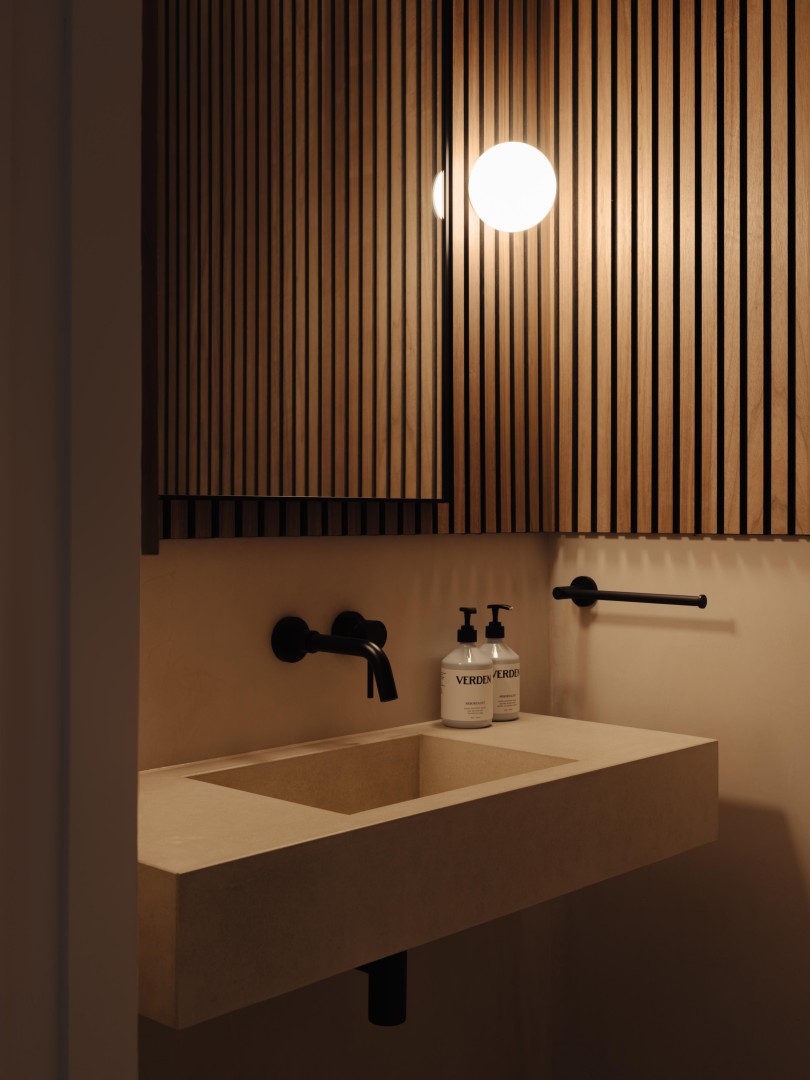
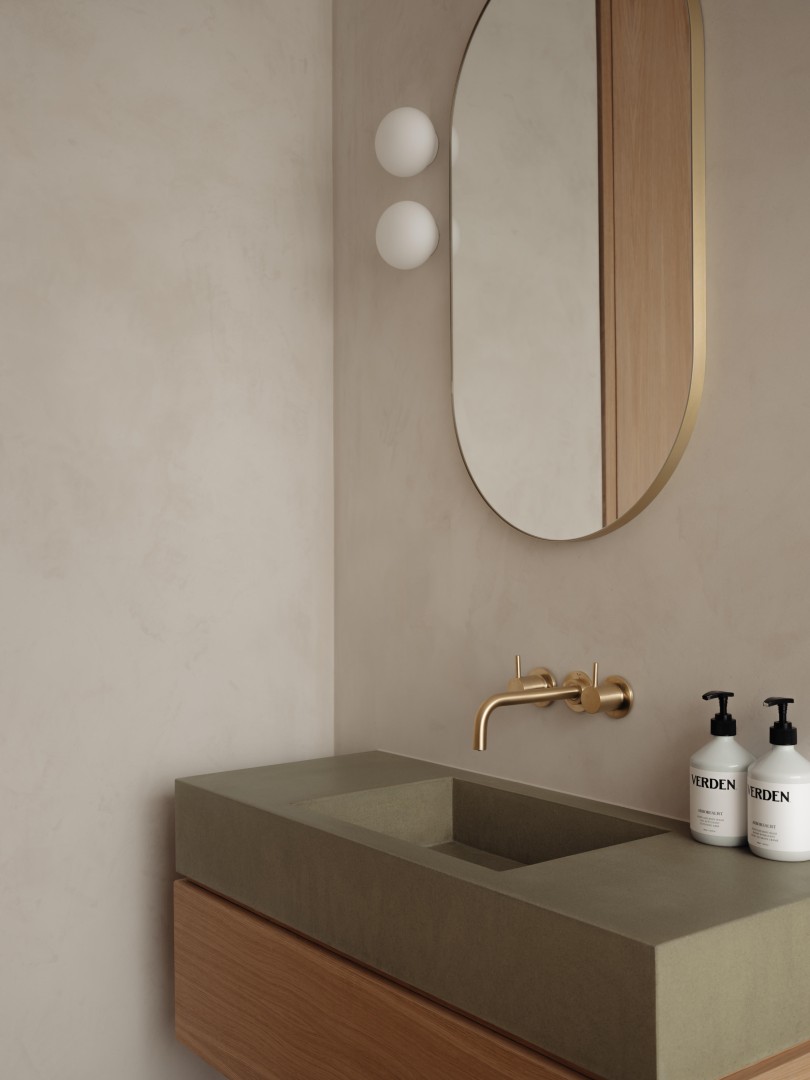
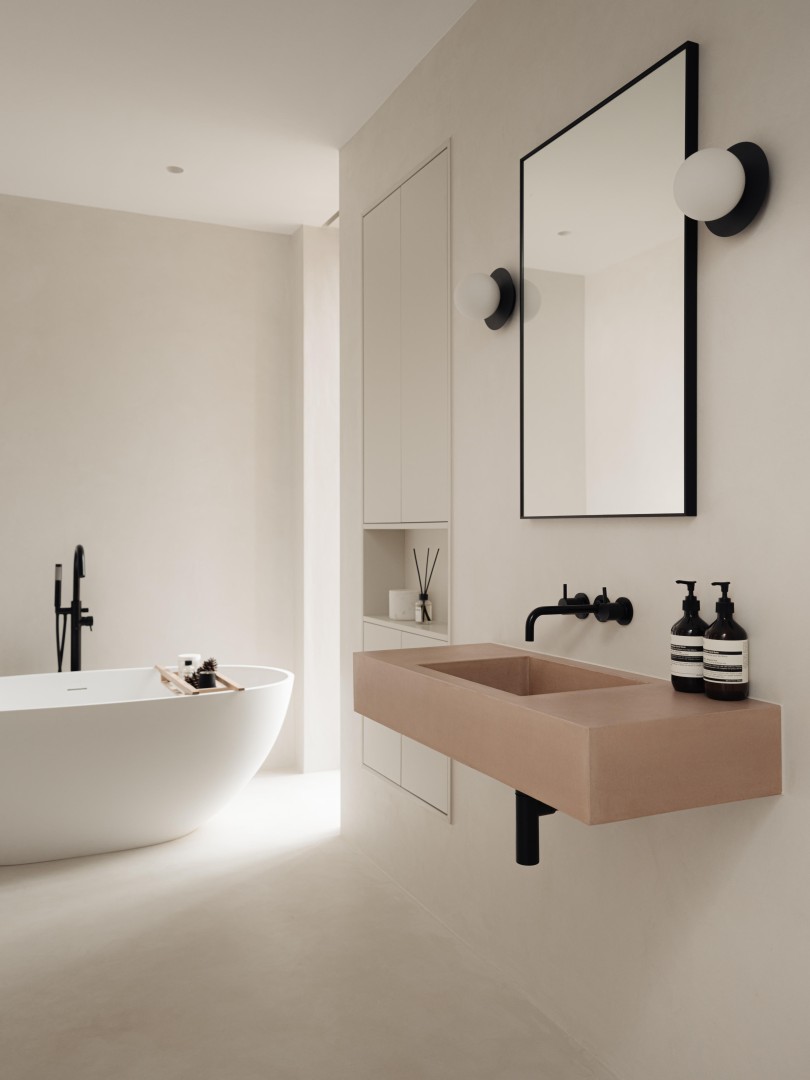
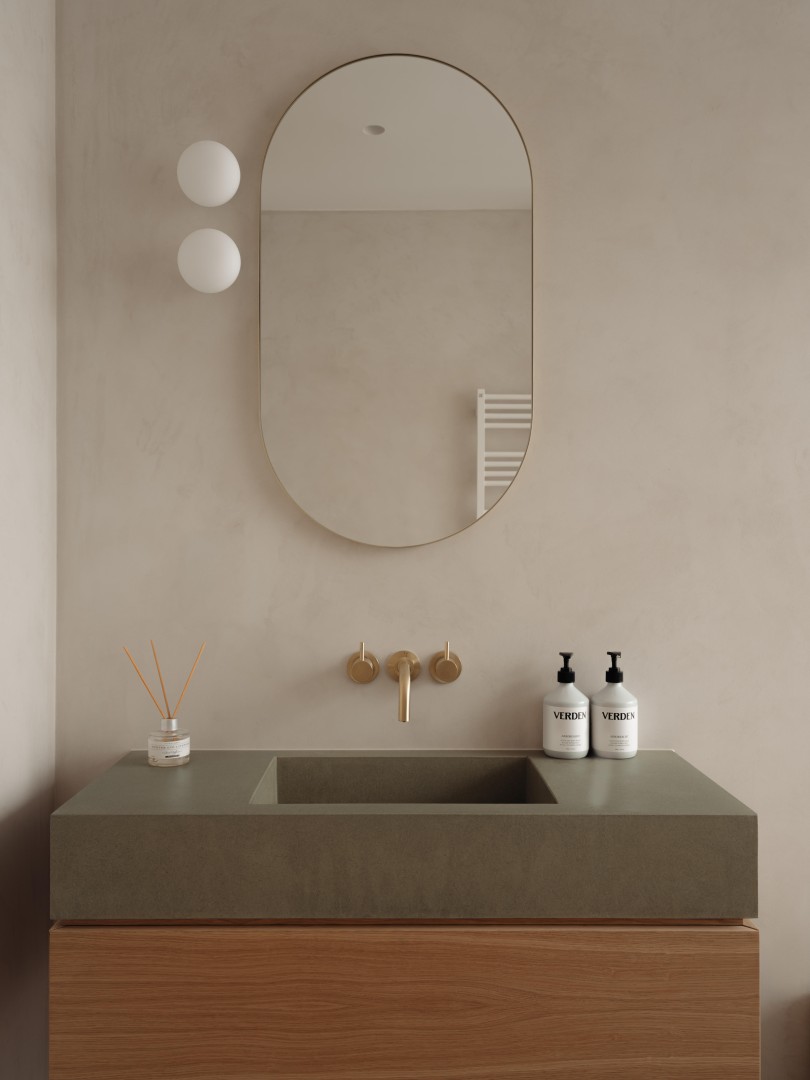
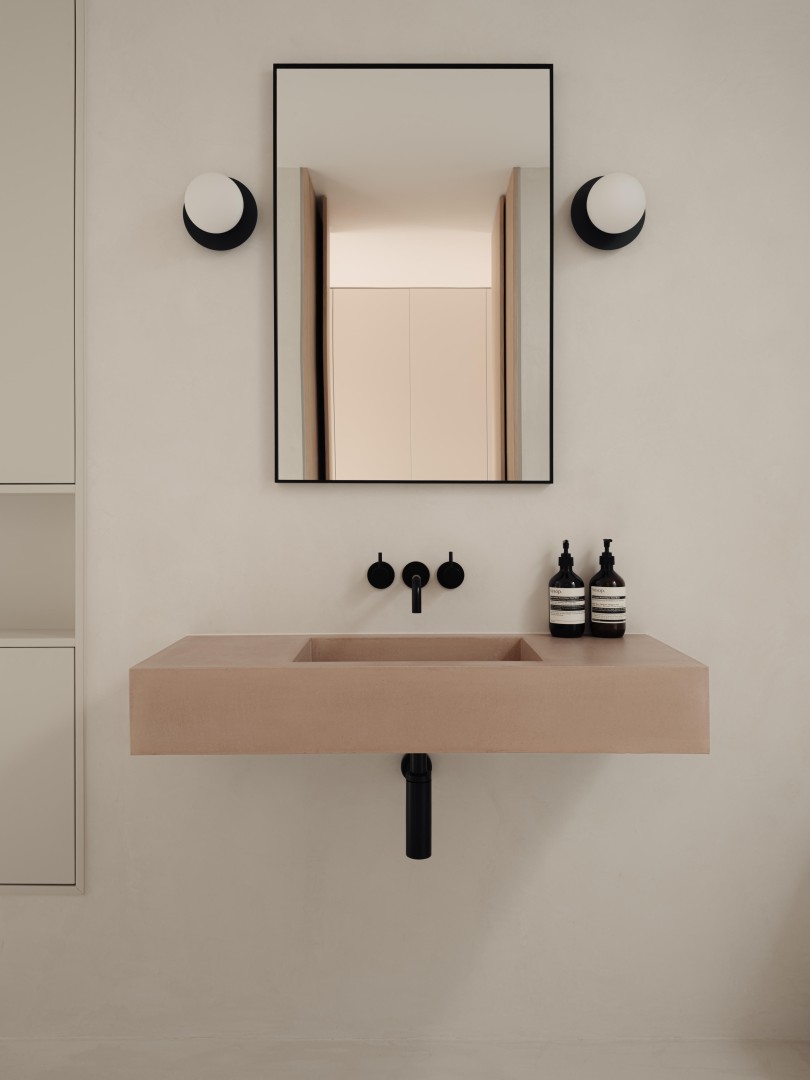
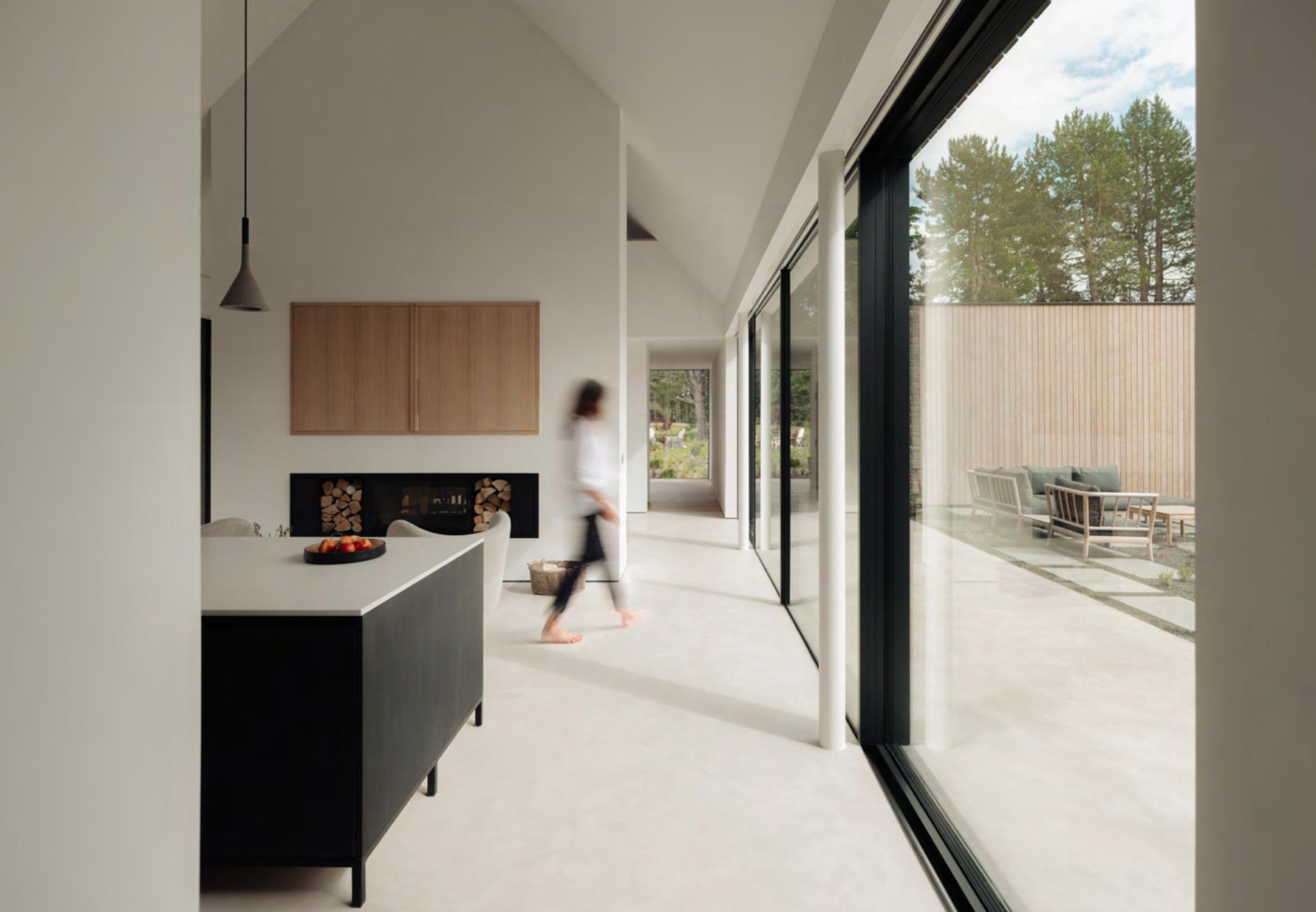
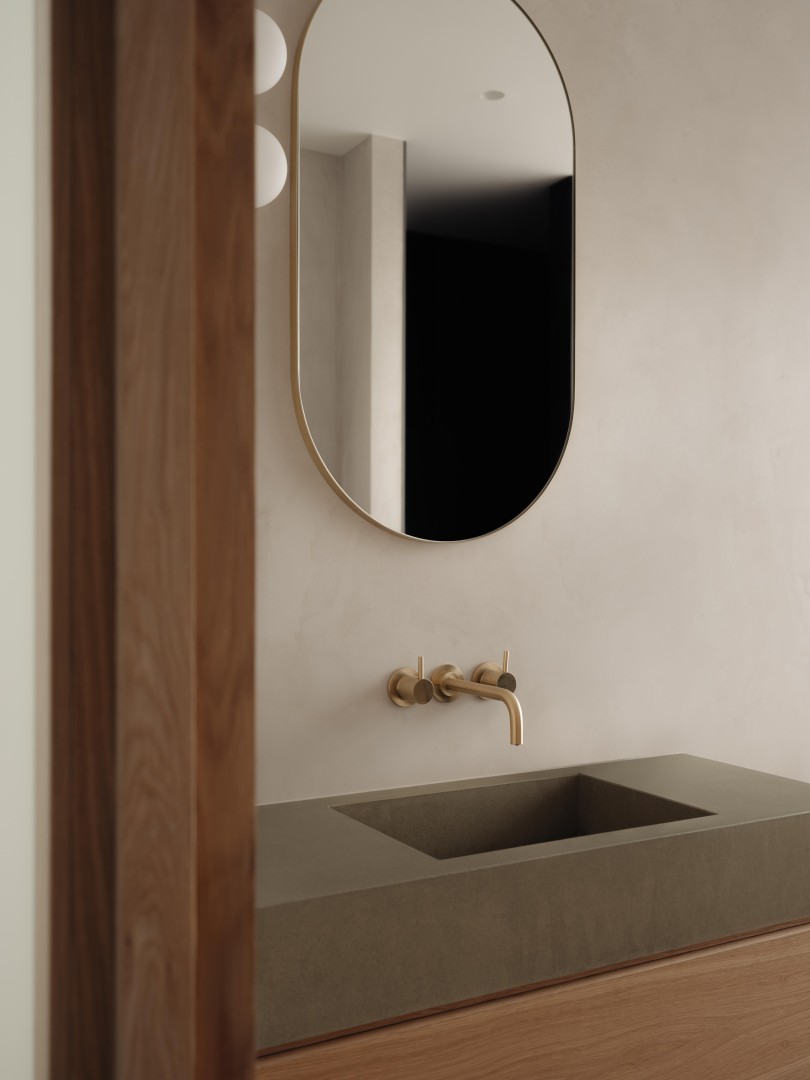
Inside, the calm continues, but it is a warm calm rather than an austere one. Andrew was clear that the practice does not pursue minimalism for its own sake. “We don’t do minimalist work or spaces for living in,” he said. Instead, the interiors rely on a limited but tactile palette that allows the clients’ lives to fill the space naturally. Timber flooring introduces warmth underfoot, while microcement floors are chosen for their “visual movement” and earthy grey tone rather than uniformity. Burnt wood appears in the kitchen and front door, and timber carries through into the whiskey suite and bedroom cabinetry. These materials create continuity across rooms without forcing sameness. As Andrew explained, it is about “subtle nods throughout a house” that ensure it “reads as part of a coherent whole,” never cold or sterile. The gentle touches of more pigmented colour also enhance the visual language, with the Fjona basins by Warrington and Rose feeding into this warmth through their Oat and Sage hues.
The relationship between inside and outside is equally considered. The garden was always intended to function as an extension of the interior. “The garden was going to essentially be its own room,” Andrew said. Through carefully placed glazing and coordinated design, each key space feels connected to its own portion of landscape. The master bedroom, kitchen, living area, and guest rooms all carry a sense of ownership over the garden outside them, and nature is not solely a backdrop; it is part of the architecture’s emotional fabric and tranquil presence.
Throughout the interview, Andrew returned to the idea that calm cannot be designed as a single gesture. The clients describe The Cairn House as “calm and serene and difficult to leave,” but that feeling, he explained, comes from “the culmination of hundreds of little things” working together. Architecture, in his view, creates the conditions for serenity, but it cannot manufacture it outright. “What you’re trying to do when you design a house for someone, is leave the opportunity for them to create that feeling,” he said. “You don’t give it to them. They’re the ones that do it.”
In that sense, the completion of The Cairn House was not an ending, but a handover. Andrew spoke about stepping aside once the project is complete, allowing the clients to take ownership and shape the home through their own rituals and habits. It is a home shaped by intimacy, by warmth, and by an understanding that true calm is not imposed. It’s in that moment, when architecture becomes a lived experience, where the project truly begins.
Acknowledgement:
Architects | Brown & Brown Architects
Photography | Mart Goossens and Dapple Photography
