Choosing the right Modular Outdoor Kitchen (MOK) is an important decision, whether it’s finding the right size, selecting the right materials and finishes, or simply choosing a provider you can trust.
At Warrington and Rose, as specialists in UHPC fabrication, we work closely with our clients to create MOK units that are tailored to their lifestyle, space, and the way they love to entertain, with the ultimate goal of giving you an additional space to create.
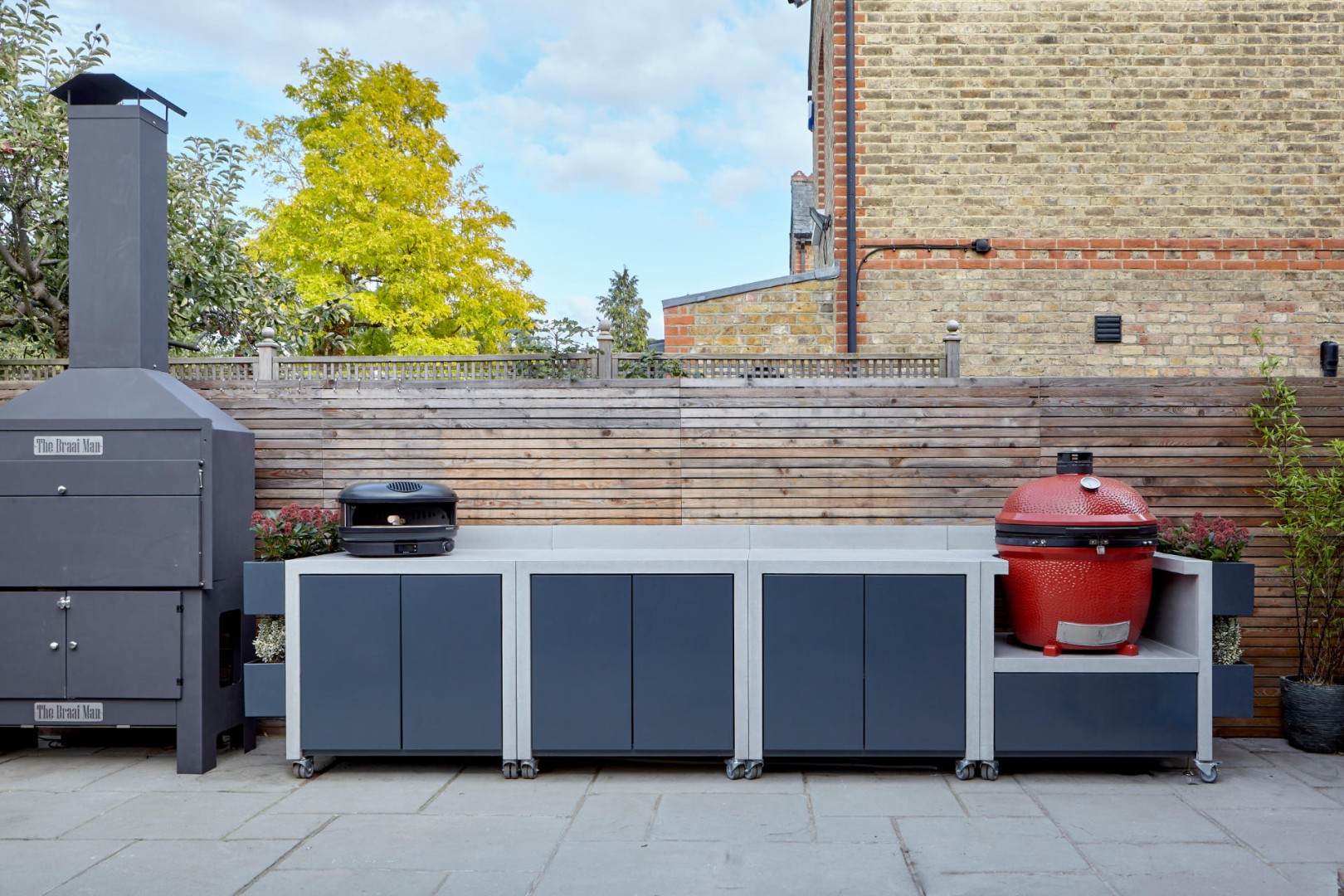
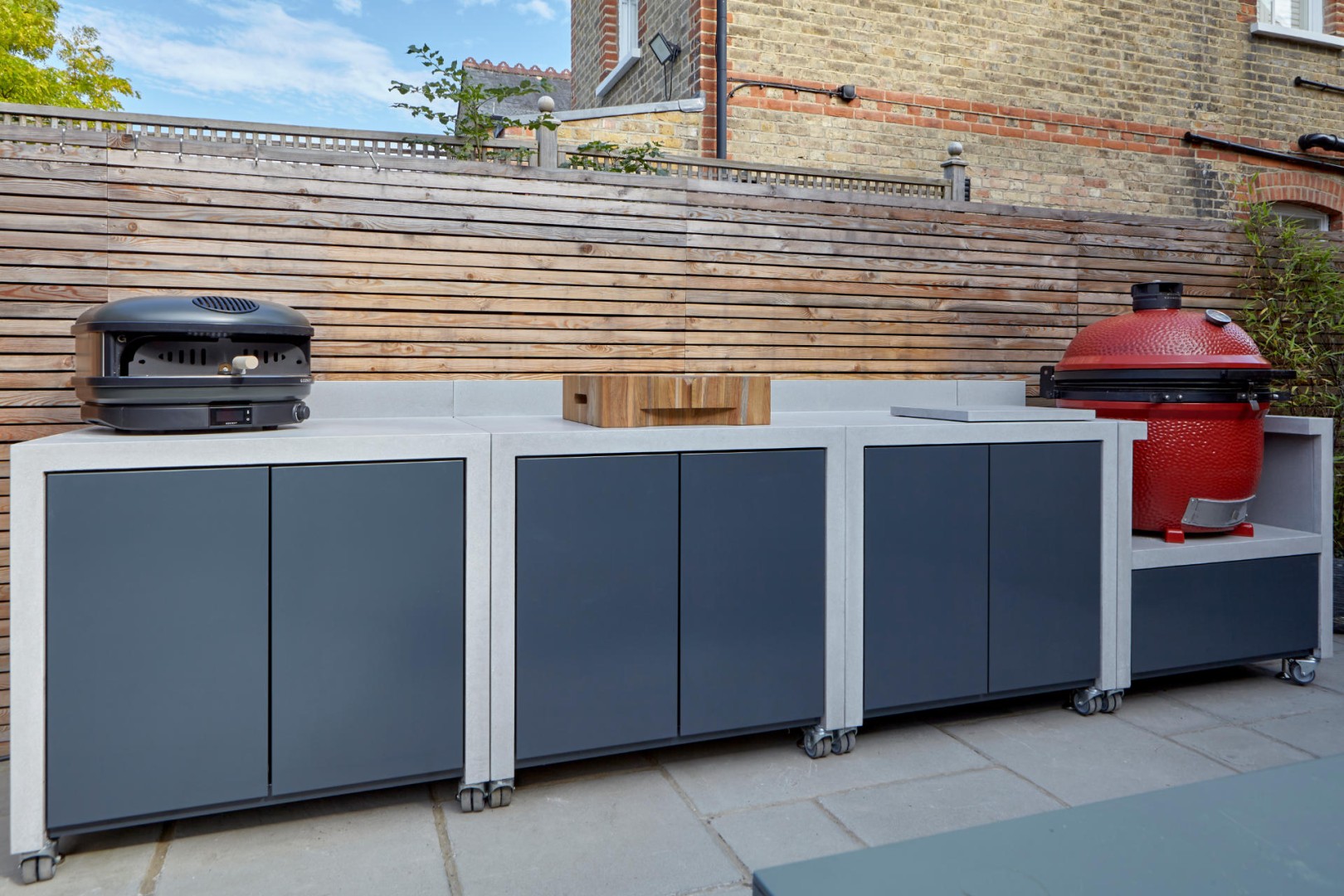
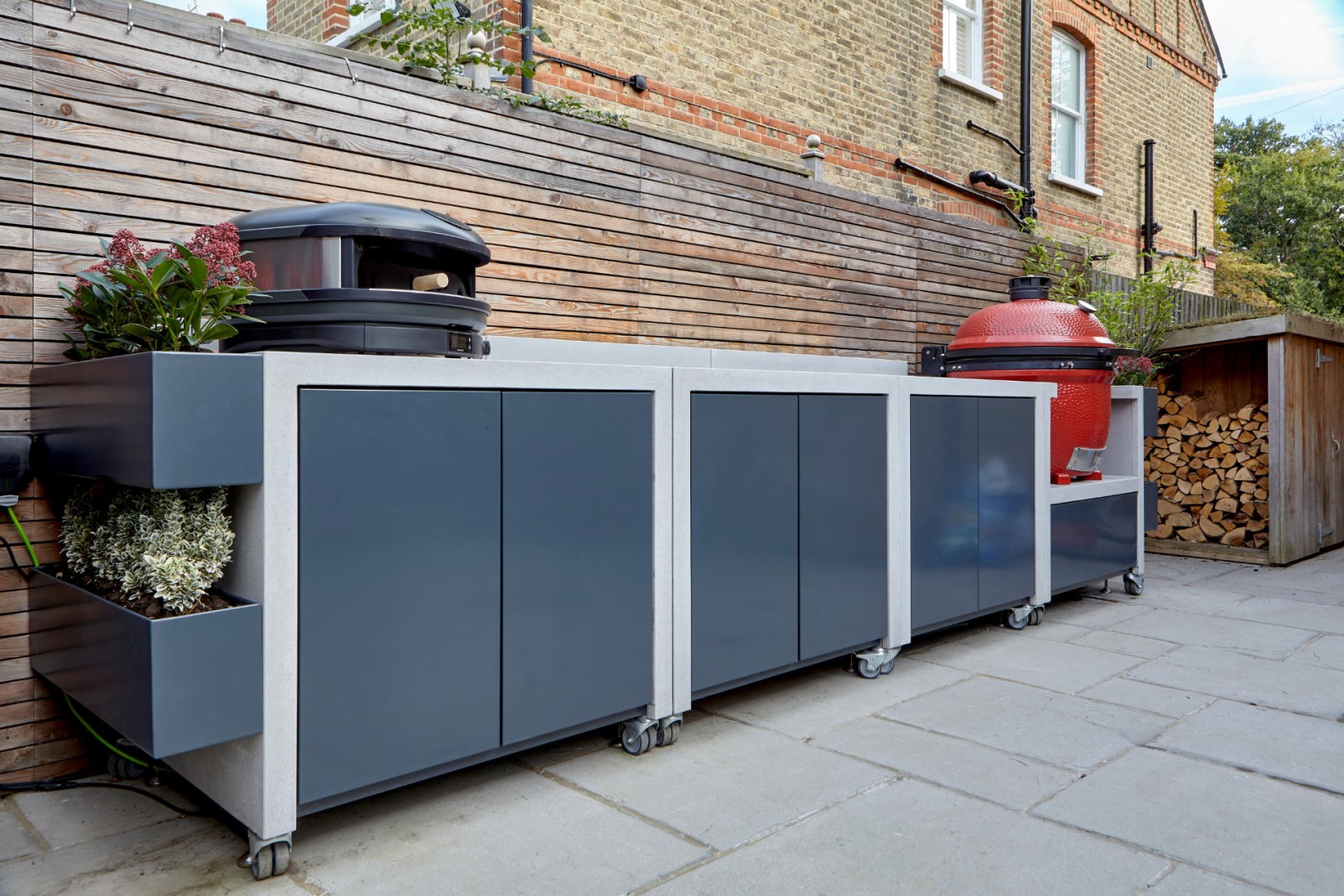
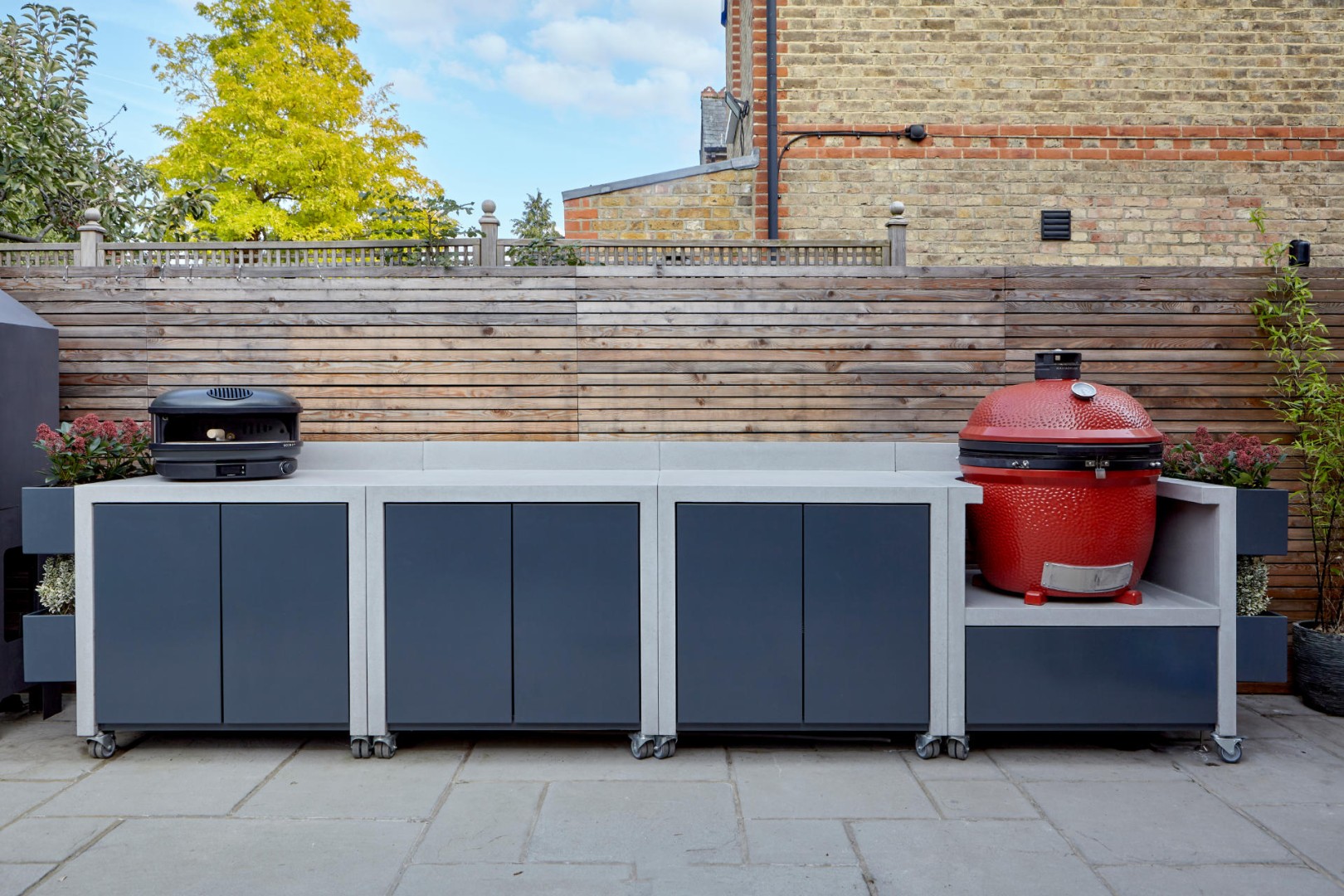
The MOK (1.0) 850 is the largest model we offer, and this particular project was one of our very first installations. With that in mind, we caught up with our client (Rob) to hear about his experience and how his MOK has performed since being installed in his garden.
What was the driving factor behind purchasing a MOK unit, and have those needs been met?
Rob (Hertfordshire):
The starting point for me was really about outdoor living. We try to spend as much time outside as possible here in the UK, and I really enjoy social environments, especially cooking for other people.
What I wanted wasn’t necessarily a “need” in the strict sense, but more a desirable solution: somewhere I could cook and prepare food outside without constantly having to go back indoors. I didn’t want to disappear from the social side of things just because I was cooking.
Before finding MOK units, I spent quite a bit of time researching other forms of outdoor kitchens via brands like Grillo and a few other well-known names, but none of them quite fit what I was looking for. Either the style wasn’t right, or they felt too much like fully fixed kitchens, which wasn’t what I wanted.
Then, thanks to the power of algorithms, I saw the MOK units, around about a month after I’d pretty much given up searching, and instantly thought, “Yes, that’s exactly it.”
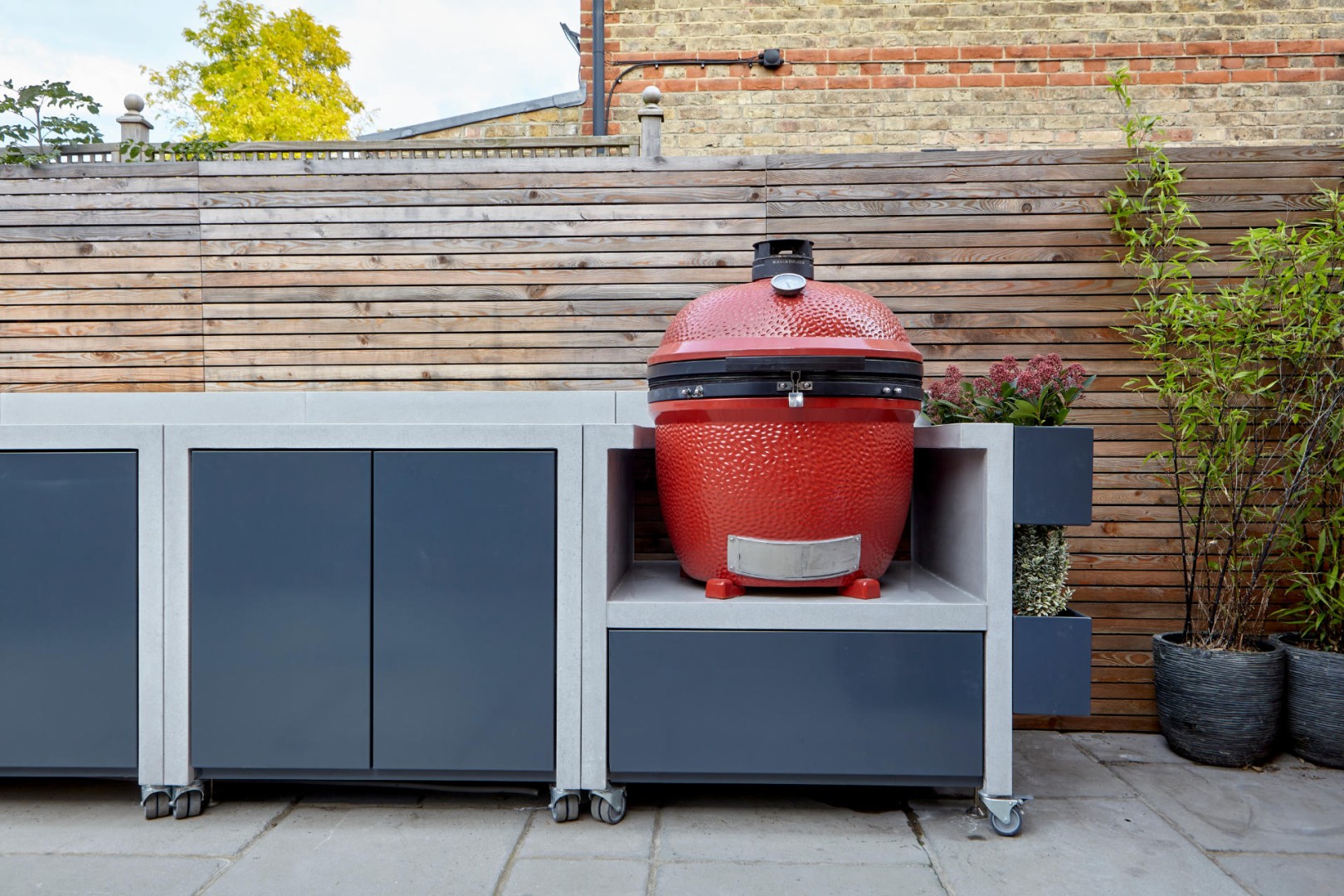
The functionality was there, but what really stood out was the style and feel. It had an integrated look without being a permanent, immovable kitchen. I liked that it could be repositioned, that it had proper storage, and that it struck a really good balance between modular flexibility and a well-designed, cohesive product.
So yes, those needs have absolutely been met.
What made Warrington & Rose stand out compared to other companies?
Rob (Hertfordshire):
There were a few factors. Price is obviously important, and to be honest, the MOK units were more expensive than some alternatives. But the missing piece, the thing that made it all click, was Michael (W+R Director).
At the end of the day, it often comes down to people. I liked him. I liked his approach. He wasn’t pushy, he wasn’t sales-driven in that typical way, and you could see his genuine passion for the product he was creating.
At the time, the units hadn’t really been done before, so I was very aware that I was something of a guinea pig. But I was comfortable with that because I trusted both the person and the process. That trust was rewarded, and as you can clearly see, the product turned out exactly as promised.
Michael also produced drawings and visuals for my unit, which really brought it to life. That design-led approach helped me understand what I was getting and feel confident in the final outcome.
So while aesthetics and functionality mattered, the relationship and trust were ultimately what made me stop searching and commit.
What practical elements of the MOK unit have made the biggest difference in how you cook and use your outdoor space?
Rob (Hertfordshire):
Storage, without a doubt.
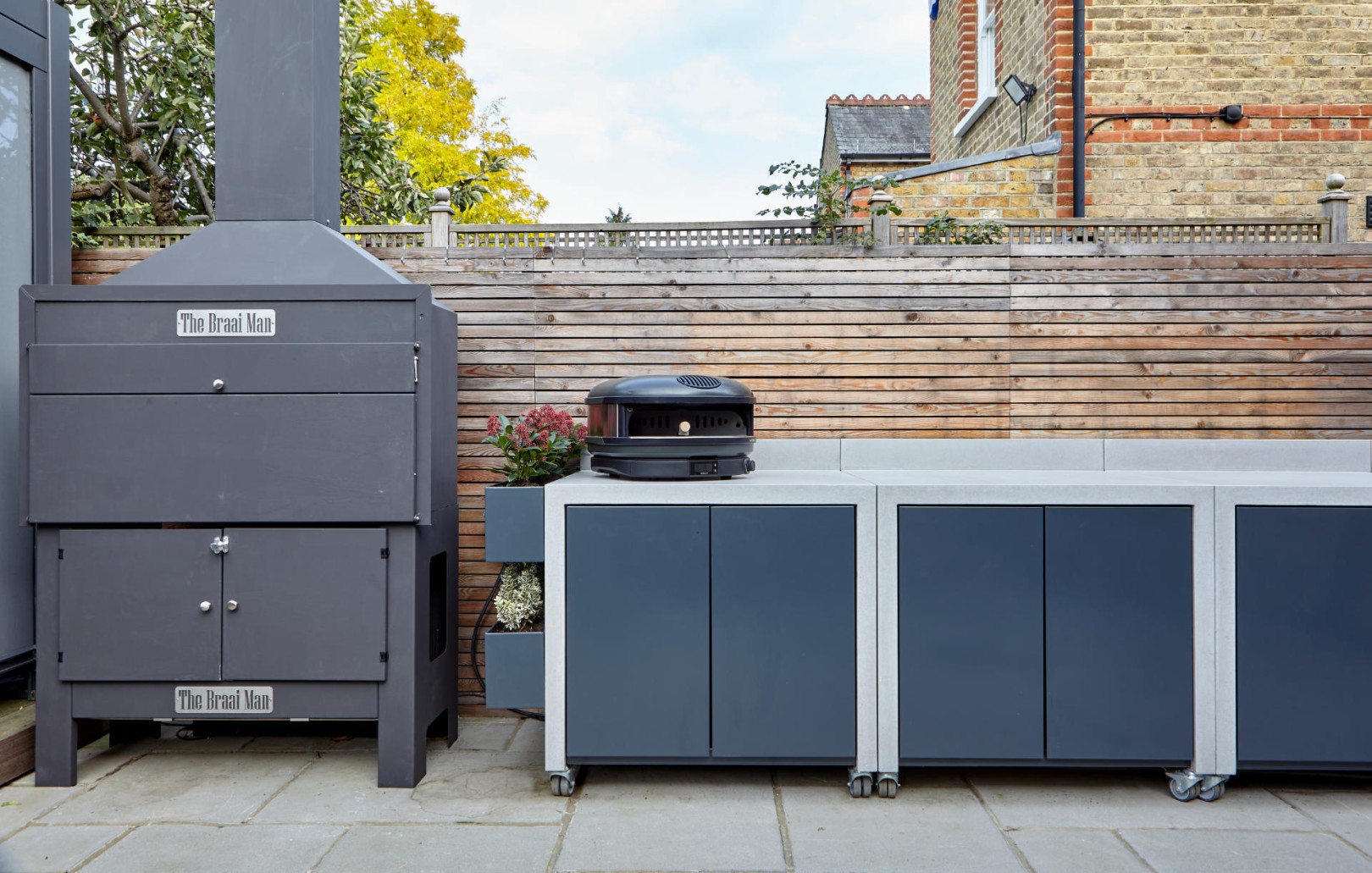
Having almost everything ready to go outside (apart from the food itself obviously) makes a huge difference. I can go out in the evening, turn the lights on, pull everything I need from the cupboards, cook, and then put it all away again.
It sounds like a small thing, but it genuinely makes outdoor cooking easier and more inviting. It removes friction.
I cook year-round, and efficiency matters. Especially now, time is something everyone values, and the MOK setup just simplifies the whole experience.
I also have my grill positioned under cover, which means the UK weather doesn’t really stop me. Sure, I might get a bit wet, but the cooking itself isn’t affected.
I’m not standing outside for hours in bad weather, but if something’s slow-cooking, I can let it do its thing and just check in. A few weeks ago, I spent several hours outside cooking an Indian-style meal with multiple curries. I’m sure my neighbours thought I was a bit odd, but for me, that’s normal and enjoyable.
Are there any specific features you’d recommend that really reinforce the desirability of the MOK unit?
Rob (Hertfordshire):
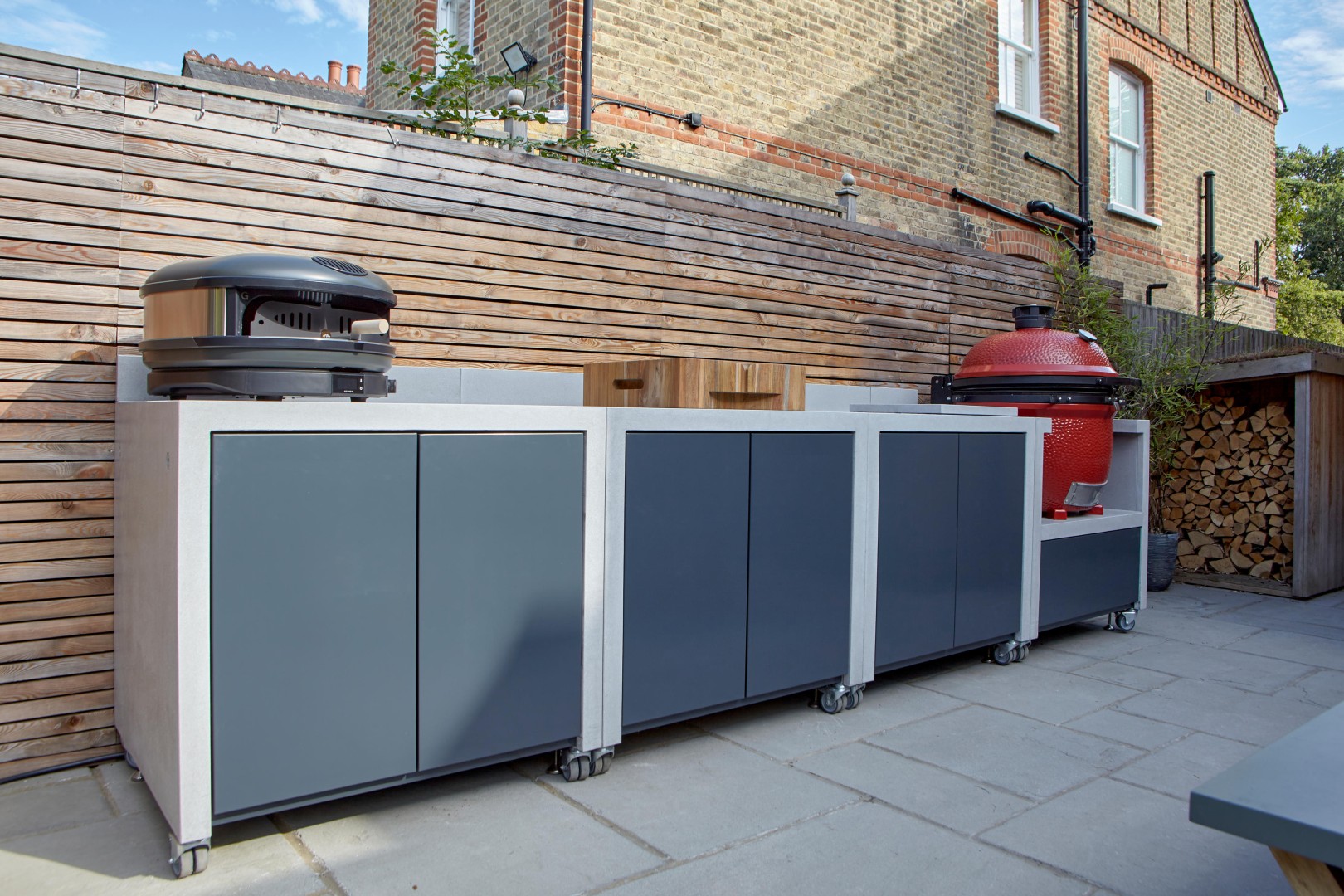
Aside from storage, having the cooking equipment fully integrated into the unit makes a huge difference.
It genuinely feels like an outdoor kitchen, not a collection of separate items scattered around the garden. Everything being in one place creates a much more enjoyable experience.
One feature I particularly love is the gas pizza oven setup. I’ve always liked cooking with fire, but I deliberately chose a gas oven for convenience during the week. Michael and I worked out a simple solution where the gas line runs discreetly through the back of the unit and into a canister hidden inside.
That means I can turn it on, have it up to temperature in five minutes, cook, and turn it off, all with no fuss. I use it far more than I expected: pizza, flatbreads, garlic bread, even meat. It’s incredibly versatile.
Another small but impactful detail is the planting integrated into the side of the unit. It softens the structure and helps it blend into the garden; it really just brings everything together visually.
None of it is overly complicated. It’s the basics, done properly, with high-quality materials. It looks good pristine, but it also looks good once it’s weathered in. It feels like it belongs in the garden now.
What advice would you give to first-time buyers of the MOK units?
Rob (Hertfordshire):
The first thing I’d say is: start with why?.
Why do you want one? How are you actually going to use it?
Once you’re clear on that, the rest becomes much easier. Someone might want more of a social bar setup, while someone else might be a pit-master who wants a refined cooking experience. Those are very different use cases, and the configuration should reflect that.
I can imagine Michael walking customers through those questions and shaping the design around how they’ll genuinely use the unit, and that’s exactly how it should be.
From there, everything else falls into place.
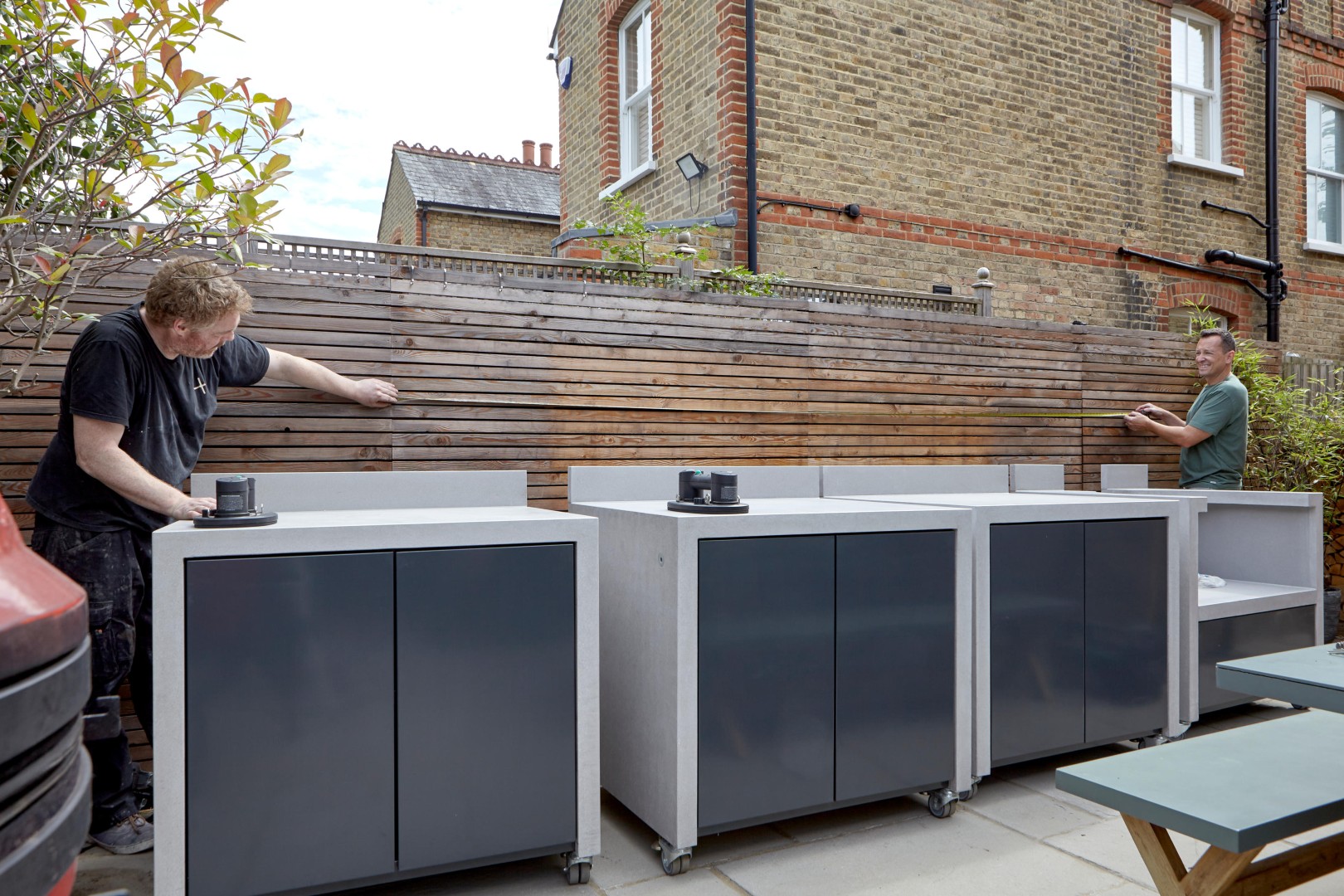
In terms of expectations: expect a personal experience. This isn’t an off-the-shelf, click-and-buy product. That’s where the value is.
I’d also say there’s real opportunity in educating customers (before and after installation) about care, use, and possibilities. That kind of guidance would elevate the experience even further and help people get the most out of what is a premium product.
Overall, the key advice is simple: engage with the process, be clear about your needs, and trust the team. If you do that, you’ll end up with something you genuinely love, and actually use.